Getting to know a place through its minerals
How many places have you first encountered on a mineral label? Perhaps you knew the name Broken Hill long before you looked for it on a map. Or a crocoite specimen introduced you to Dundas, on Tasmania's west coast. Collecting gives us an unusual introduction to geography. We become interested in a place because of something small enough to hold, then discover how much there is to learn beyond the specimen itself.
For our overseas readers, a little Australian geography can help. Broken Hill is in far western New South Wales. Dundas is in Tasmania, the island state south of mainland Australia. They are widely separated places with different mineral histories. Even when we know their names well, it's worth looking at a map rather than allowing "Australian minerals" to become one large, rather vague category in our minds.
Broken Hill offers a good example of how an interest can grow. You might begin with one mineral and then become curious about the other species recorded from the district. The National Museum of Australia's account includes rhodonite, smithsonite and other examples, alongside the history of the lead, zinc and silver ore body. There are several different ways into that story, depending on what first interests you.
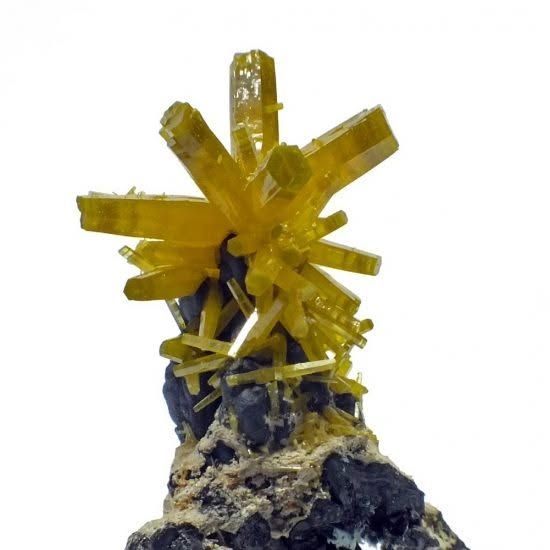
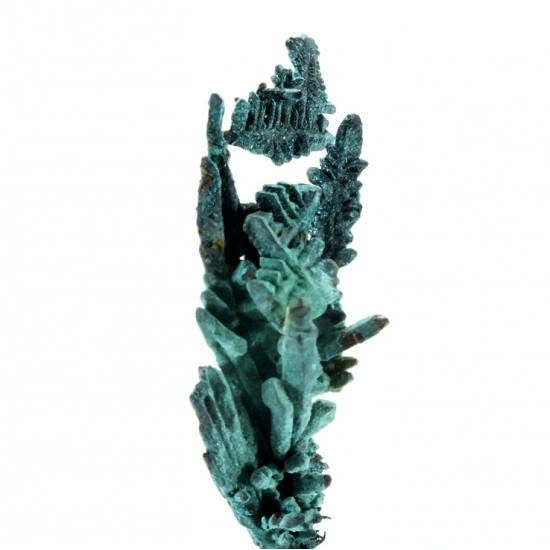
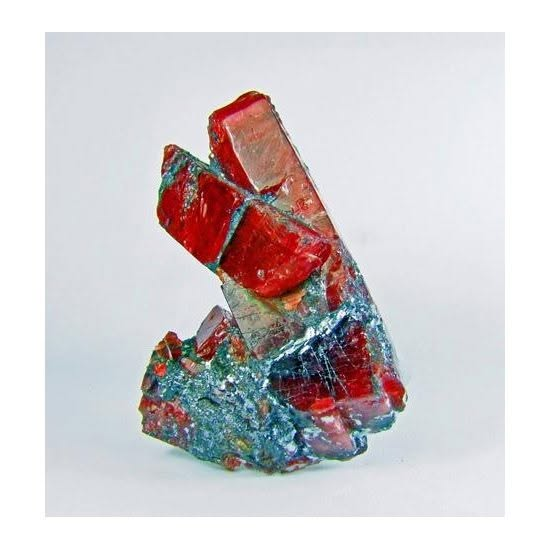
Photographs: Jon Mommers, of specimens that have passed through his own collection.
At Dundas, the red-orange crocoite crystals are an understandable starting point. The Australian Museum's account of an Adelaide Mine specimen also describes the fragile crystals and their surrounding material. That encourages us to think about how a specimen was found and preserved, as well as its appearance. A photograph can begin the conversation; reading about the occurrence gives us more to notice when we look again.
A quieter locality can be just as rewarding to explore. Museums Victoria records chabazite, a member of the zeolite group, from Flinders in Victoria. A record like that might send you looking for other documented specimens from the area. You don't have to set yourself the task of acquiring them all. Following the references and comparing what has been recorded can be a collecting interest of its own.
This is where a good label matters. A mine name, district and state are much more useful than "Australia" on its own. At the same time, the information should be only as precise as the evidence allows. If an old label gives a district but no mine, keep that distinction. We lose something when a reasonable uncertainty is replaced by a confident guess that is later repeated as fact.
Reading about localities also introduces us to the people who worked, collected and studied there. Their observations may survive in an article, an old collection catalogue or a note kept with a specimen. The Australian Journal of Mineralogy is one useful Australian reference. It includes locality studies and material for readers with a general interest, alongside more technical work.
Some collectors will know an Australian district through years of collecting or study. Others may know it entirely through specimens in an overseas collection. Both perspectives are valuable. A well-recorded piece preserved abroad may add something to a conversation, while someone with local knowledge may help explain a name or an old description that makes little sense from a distance.