The Monster Mine, Burra, South Australia
Burra, in the Mid North of South Australia, grew up around a mine so productive its own backers nicknamed it the Monster. Worked from 1845 to 1877, the Burra Burra Copper Mine was for a decade the largest mine in the country, and its gem-quality botryoidal malachite made the locality famous among mineral collectors worldwide — a reputation it still holds today, alongside a well-documented history as one of colonial Australia's most important industrial sites.
A lottery, and a mine
The discovery itself is a story collectors tend to enjoy. In June 1845, a shepherd is said to have walked a considerable distance to bring a sample of rich copper ore to the newly re-formed South Australian Mining Association, and was paid three pounds for the tip. A second herdsman then showed the actual outcrop to two Adelaide businessmen. Under the land rules of the day, the ground could only be bought as a 20,000-acre Special Survey, so two rival syndicates — remembered locally as the "Snobs" (shopkeepers and the Mining Association) and the "Nobs" (wealthier colonists) — pooled funds to buy it jointly, then divided the survey by drawing lots. The lot that fell to the storekeepers' syndicate turned out to sit directly over the orebody. Mining began within months, in September 1845.
The largest mine in the country
What followed was extraordinary by any measure. The mine shipped over 23,000 tons of ore in 1851 alone, representing roughly 5,000 tons of metal copper, and is estimated to have supplied about five percent of the entire world's copper through the 1850s. Each five-pound founding share eventually returned over 300 pounds. At its peak the mine employed just over a thousand men and boys, and the town that grew up around it held about 5,000 people — one of the largest inland settlements in the country at the time. Cornish beam engines, imported specifically to pump water from the workings, included the famous "Monster Engine" of 1852, hauled overland from Port Adelaide by a purpose-built cart still remembered as the Burra Jinker.
The minerals collectors know
Burra's ore body sits in dolomite rock, and the copper sulphides first deposited there were later altered near the surface into the bright secondary minerals the locality is known for today: chiefly malachite, azurite, chrysocolla and cuprite, with native copper and the rarer phosphate libethenite also recorded. It was the malachite that made Burra's name — gem-quality, botryoidal (grape-like) material, much of it polished for ornamental use as well as collected as mineral specimens, in a style and quality that made the locality internationally renowned at the time. Over 45 valid mineral species have been recorded from the mine in total, a reflection of just how chemically active the site's weathering environment was.
A Cornish mine on Australian soil
Burra was a colonial company on paper, but it ran on Cornish lines from its first season — a Cornish captain and crew were on site within months of the mine opening, and Cornish beam-engine technology drained the workings throughout its life. South Australia actively recruited Cornish miners at the time as the most experienced hard-rock miners available anywhere, and by the 1860s Cornish settlers are thought to have made up over 40 percent of the colony's immigrant population. That legacy is still visible at Burra today in the company-built cottages of Paxton Square, among the earliest examples of Cornish domestic architecture in Australia, and in the Australian Cornish Mining Sites' listing on the National Heritage Register.
Closure, and what's there today
Falling copper prices and the exhaustion of the richest near-surface ore closed the original mine in September 1877. The site was reopened as a large modern open-cut operation from 1969 to 1981, working the lower-grade ore the first miners had left behind; when pumping stopped at the end of that second phase, the pit filled with water and remains so today. The original mine site is now a protected heritage area, open to the public as an outdoor museum via the Burra Heritage Passport, including a reconstructed Cornish engine house. Collecting on site is no longer permitted, which makes any specimen's documented history — who collected it, and roughly when — a genuinely important part of its story rather than a formality.
What this means for a Burra specimen
Because the mine itself is now off-limits to collectors, material in circulation today necessarily comes from historic collections, from material worked during the original 1845–1877 period, or from the 1969–1981 open-cut phase. A specimen that can be traced to a named collection or a documented period of the mine's working life carries real weight alongside the locality name itself — and "Burra" on its own is less precise than it should be, since the district held more than one working; where it's known, the specific mine (the Burra Burra Mine itself, as distinct from nearby workings) is worth recording.
Specimens from this locality
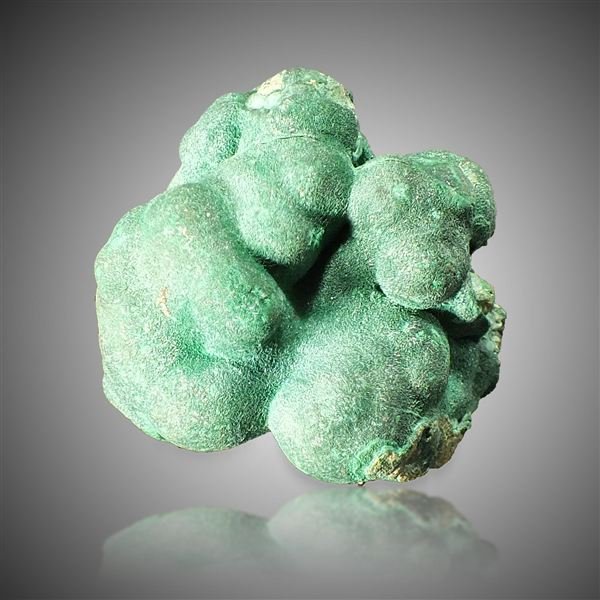
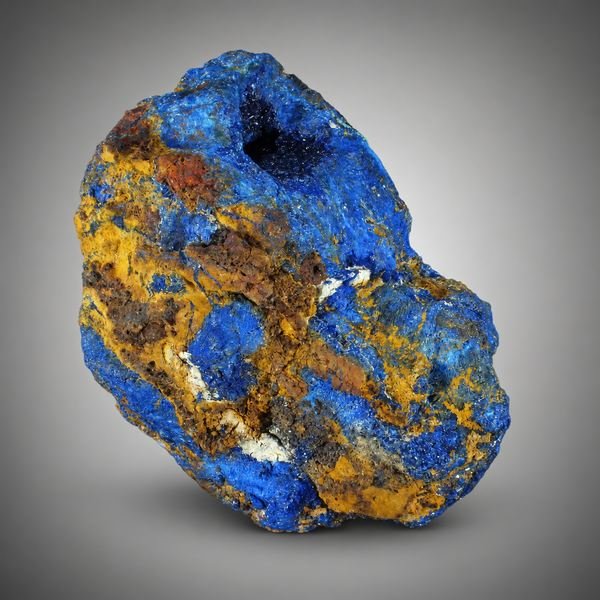
This note describes the Monster Mine (Burra Burra Copper Mine) and its minerals generally, using well-established public mineralogical and historical information about the district. It is not a claim about the specific collecting history of any individual specimen beyond what's recorded on that specimen's own page — in these cases, the Burra Open Pit Mine and Burra Burra Mine localities and their recorded collection provenance already on file.