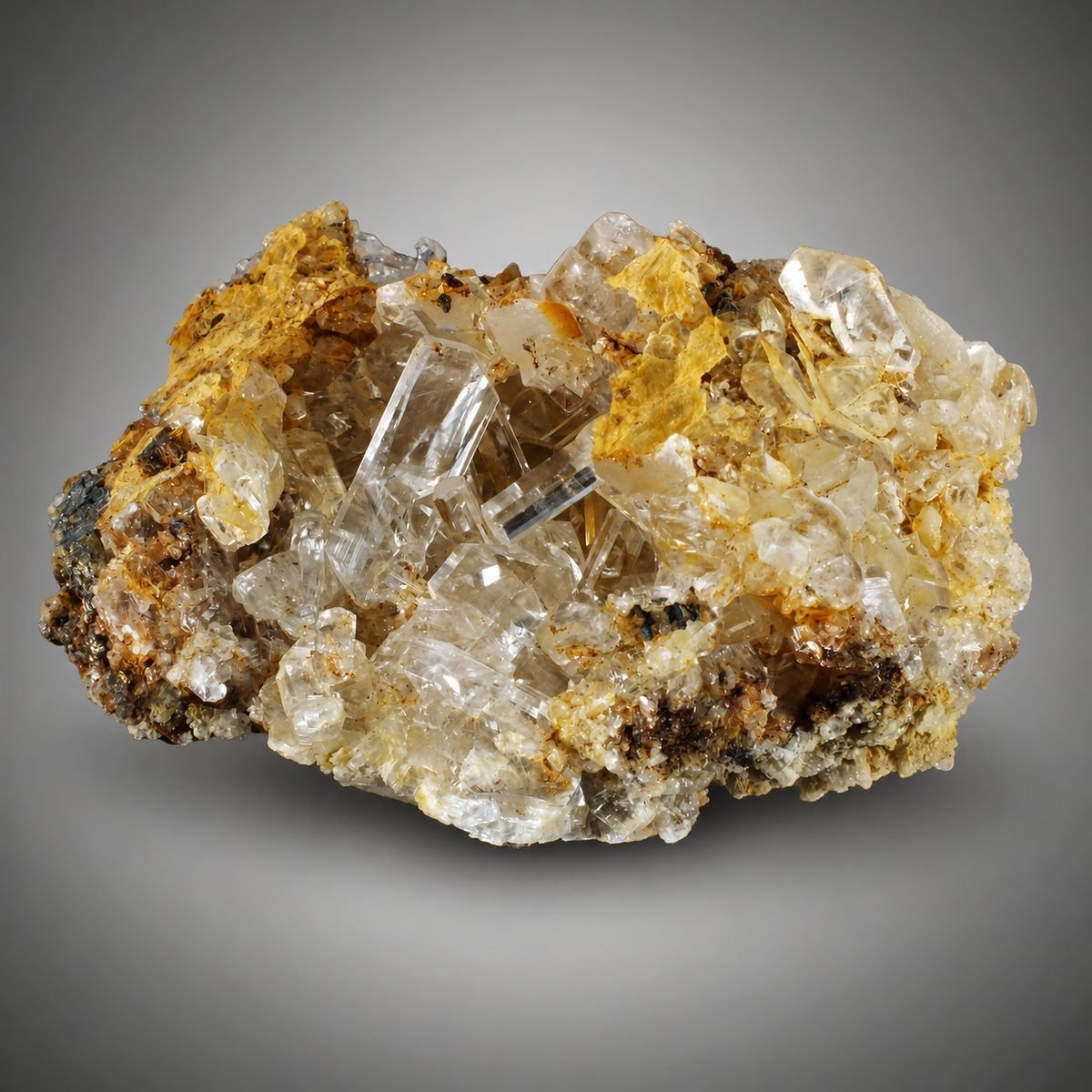


Gypsum
One of one. Pay securely by PayPal or direct bank deposit at checkout.
This specimen is Gypsum from the Revenue Extended Mine, Mount Isa District, Queensland, Australia, measuring 74 x 58 x 43 mm and weighing 148 g. It is drawn from the David Vince Collection. Gypsum, a hydrated calcium sulphate, is among the most widespread sulphate minerals on earth, but its appearance varies considerably with the setting in which it forms. Mount Isa is one of Australia's largest and longest-running base-metal mines, worked since the 1920s for copper, lead, zinc and silver, and within its oxidised and altered zones Gypsum develops as a secondary mineral where sulphate-bearing groundwater has reacted with the host rock. A secondary generation of this kind, crystallising in cavities and fractures well after the primary sulphide mineralisation, is a different thing from the massive or fibrous Gypsum typical of evaporite settings, and it is this secondary form that occurs within the Mount Isa workings. At 74 x 58 x 43 mm and 148 g, the specimen is a compact cabinet or thumbnail-scale piece. Gypsum is a comparatively soft mineral, rated 2 on the Mohs scale, and is sensitive to humidity and careless handling, so a stable, low-traffic display position away from direct moisture is advisable. The specimen's documented provenance is the David Vince Collection.